Update time: 2025-12-02 Views: 1619
Why is Teflon mesh belt the ideal choice for microwave drying?
The working principle of microwave drying involves using microwaves to directly act on the internal molecules of the material, causing them to vibrate and friction at high speeds, thereby generating heat and achieving rapid drying from the inside out. This unique working environment imposes stringent requirements on the conveyor belt
1. Excellent High and Low-Temperature Resistance: The Teflon mesh belt can operate stably over a wide temperature range of -70°C to 260°C, fully adapting to the instantaneous high temperatures generated during microwave drying without softening, deformation, or degradation.
2. Extremely Low Dielectric Constant and Loss: Teflon material itself hardly absorbs microwaves, allowing the microwaves to penetrate the conveyor belt unimpeded and directly act on the material below, avoiding unnecessary energy loss on the belt and significantly improving energy efficiency and drying performance.
3. Excellent Non-stick (Anti-adhesive) Properties: The Teflon surface boasts the universally recognized best anti-stick characteristics, effortlessly separating materials prone to melting and sticking during the drying process (such as high-sugar, high-fat foods, chemical raw materials, etc.). This ensures product integrity and smooth conveying, significantly reducing downtime for cleaning.
4. Excellent chemical stability: Resistant to corrosion from strong acids, strong alkalis, and various organic solvents, ensuring stable performance and extended service life even in humid and corrosive drying environments.
5. High Strength and Durability: The base material is made of fiberglass or Kevlar, with a Teflon coating on the surface, giving the belt high tensile strength and mechanical durability, enabling it to withstand prolonged continuous operation.

Which drying industries can utilize PTFE conveyor belts?
The aforementioned characteristics of Teflon mesh belts enable them to excel in various microwave drying industries, where stringent requirements for hygiene, cleanliness, efficiency, and stability are paramount.
1.Food processing industry
This is one of the most widely applied fields for Teflon conveyor belts. Microwave drying can effectively preserve the color, aroma, taste, and nutritional components of food.
Drying of Fruits and Vegetables: Drying vegetable and fruit slices (such as banana slices, apple slices, and carrot granules). The non-stick property of the Teflon belt ensures that fruit slices with high water and sugar content do not adhere to the belt, making them easy to clean and compliant with food hygiene standards.
Drying of Grains and Nuts: Used for drying corn, soybeans, peanuts, melon seeds, and more. The mesh belt does not absorb microwaves, allowing thermal energy to concentrate on the materials for uniform and thorough drying.```.
·Meat and Aquatic Product Drying: Drying meat strips, fish jerky, dried shrimp, etc. Its corrosion resistance can withstand the erosion of salt and grease, while its anti-stick properties ensure the product maintains its intact form.
·Drying of convenience foods and seasonings: Rapid dehydration and drying of items such as instant noodle vegetable packs, noodles, yeast, pet feed, etc.
2. Pharmaceutical and Health Products Industry
The industry has extremely high requirements for cleanliness, pollution-free conditions, and sterility in the production environment.
·Chinese Herbal Preparations: Used for drying herbal extracts, pills, tablets, etc. The Teflon mesh belt is chemically inert and does not react with medicinal ingredients, ensuring the purity of the drugs.
·Pharmaceutical Raw Materials: Drying various chemical synthetic drug powders and granules, their chemical corrosion resistance ensures production safety.
·Health supplements: Drying of products such as probiotic powder, plant extracts, and capsules.
3. Chemical Industry and New Materials Sector
Chemical materials are often corrosive, viscous, or require high purity.
Fine chemicals: Drying catalysts, dyes, pigments, plastic pellets, resins, etc. Teflon conveyor belts can resist highly corrosive chemicals, ensuring product purity.
Battery materials: During the drying process of lithium battery cathode and anode materials (such as lithium iron phosphate and lithium cobalt oxide), the PTFE mesh belt eliminates the risk of metal impurity shedding and can withstand high temperatures, ensuring the purity and consistency of the battery materials.
·Minerals and Ceramics: Used for drying kaolin, ceramic powders, molecular sieves, and more.
4. Textile and Dyeing Industry
·Textile Drying: Used for microwave setting and drying of yarns and fabrics. The Teflon mesh belt features a smooth surface, preventing scratches on delicate fabrics.
·Post-dyeing treatment: Drying textiles containing dyes enhances their corrosion resistance to withstand complex dye chemical compositions.
Previous: Comprehensive Guide to Teflon High-Temperature Fabric: Specifications and Applic...
Next: No
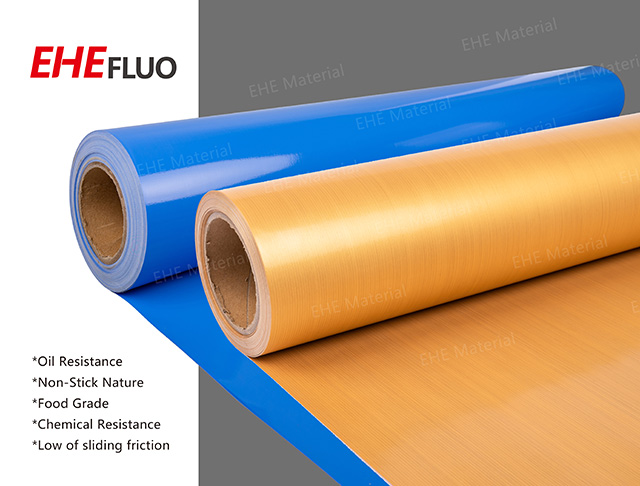
Oil resistant PTFE Fabric is used in a wide variety of industrial food processing applications, including contact belt grills, where high productivity is achieved by cooking between upper and lower heated belts. Laminated fabric is the product of choice whenever processing requires high heat and thr...
More Info
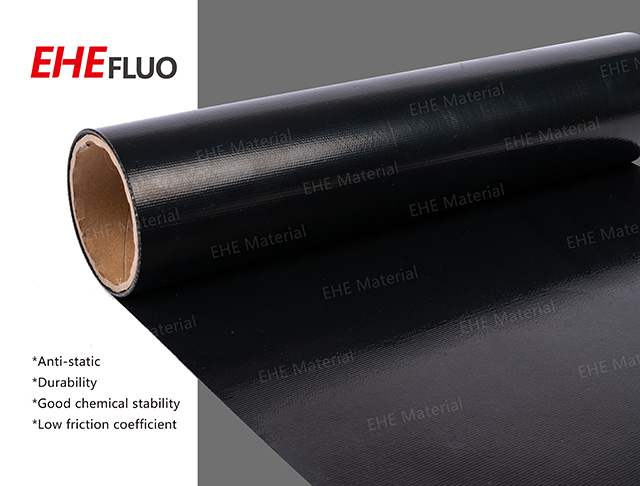
Anti-Static Black PTFE Fabric – The EB series is made by combining premium grade fiberglass fabric, PTFE and carbon or graphite to the coating process. These fabrics can be grounded to eliminate static electricity during operation.
More Info
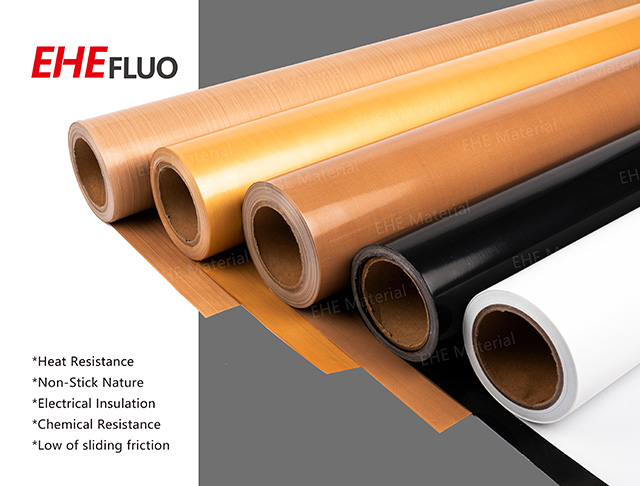
PTFE glass fabric is a high-performance material created by impregnating woven fiberglass fabric with PTFE, resulting in a durable and versatile product. This combination endows the fabric with remarkable attributes, including heat resistance, low friction, excellent electrical properties, and resis...
More Info